IoT (Internet of Things), AI (Artificial Intelligence), and ML (Machine Learning) are the foundations of the modern economy. These technologies are often connected or interrelated with the real-world systems. It’s crucial to understand their architecture, systems, and key differences to use them as a connected intelligence pipeline.
This blog will explain their core terminologies, functions, applications, and roles in Industry 4.0.
System Architecture
Every smart system encompasses sensing through IoT, learning via ML, decision making with AI, and execution using automation.

- Sensing layer: IoT
- Learning layer: Machine learning
- Decision layer: Artificial intelligence
- Action layer: Automation
Sensing layer
At the foundation of every modern intelligent system lies the layer responsible for bringing real-world data into digital systems.
IoT connects the physical world to the digital world by continuously capturing real-world signals.
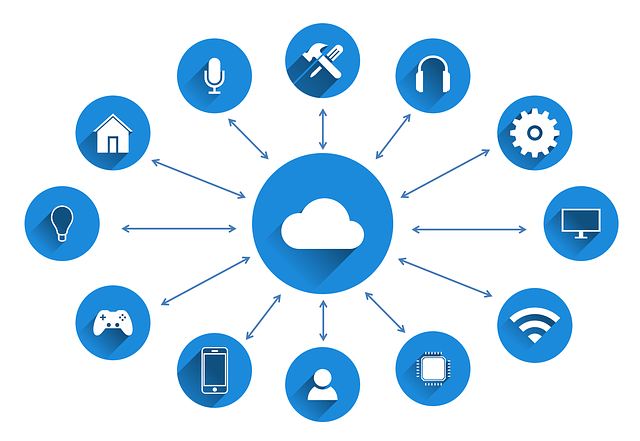
Components of IoT
An IoT ecosystem is a combination of multiple components:
Sensors
Sensors are responsible for detecting physical conditions. They measure parameters like Temperature, Pressure, Humidity, Motion, etc.
For example, a vibration sensor in a machine can detect even the smallest imbalance in rotating parts.
Devices
Devices (like smart machines, wearables, or controllers) collect data from sensors and prepare it for transmission.
In industrial environments, a single machine may have 10–50 sensors attached, all generating data simultaneously.
Embedded Systems
Embedded systems are small computing units inside devices.
They perform the following functions:
- Read sensor data
- Perform basic filtering
- Convert signals into usable formats
Gateways
Gateways act as agents between devices and central systems.
They are responsible for collecting data from multiple devices, reducing unnecessary data load, and sending structured data to cloud platforms.
Functions of IoT
Captures Environmental and Operational Data
IoT systems continuously monitor real-world conditions. It works 24/7 in real time at high frequency. Consider, for example:
A temperature sensor may record data every second, generating:
- 60 data points per minute
- 3,600 data points per hour
- Over 86,000 data points per day (per sensor)
Converts Analog Signals into Digital Data
Real-world signals (like heat or pressure) are analog.
IoT systems convert these signals into digital values and standardize them into formats usable by software. Consider, for example:
- Temperature → 75°C
- Pressure → 2.5 bar
- Vibration → frequency values
This conversion is critical because, without digitization, data cannot be processed or analyzed.
Transmits Data Using Communication Protocols
Once data is captured and digitized, it must be transmitted.
IoT uses lightweight communication protocols such as:
- MQTT (Message Queuing Telemetry Transport): Ideal for real-time, low-bandwidth communication
- HTTP: Common web-based communication
- CoAP (Constrained Application Protocol): Designed for low-power devices
These protocols ensure fast data transfer, low energy consumption, and reliable communication
Enables Real-Time Monitoring
One of the biggest advantages of IoT is real-time visibility. Businesses can monitor machines, track performance, and detect deviations.
If you want to explore a real-world example, read our article about Smart Factory: A Complete Guide.
Despite its functions, IoT has certain limitations, such as zero pattern recognition, an inability to interpret data, and a lack of decision-making capability.
Machine learning
Machine Learning is the layer that transforms raw, unstructured data into meaningful insights.
If IoT tells you what is happening, Machine Learning helps you understand:
- What patterns exist in this data?
- What is likely to happen next?
(Source: Image by macrovector on Freepik))
Functions of machine learning
Analyzes Historical + Real-Time Data
ML models are trained on historical data collected over time.
This may include sensor readings, machine performance logs, failure history, and operational conditions.
Once trained, the model starts analyzing real-time incoming data from IoT sensors and compares it with past patterns.
Detects Patterns and Relationships
Machine Learning identifies relationships that are not obvious to humans.
For example:
- A slight increase in vibration alone may not mean anything
- A slight temperature rise alone may not mean anything
But together, over time, they may indicate that this combination usually leads to failure.
These relationships are often non-linear, multi-dimensional, and time-dependent.
Detects Deviations
One of the most common uses of ML in IoT systems is deviation detection. Instead of just looking for known failures, ML learns what “normal” behavior looks like. Then it flags anything that deviates from it. Consider, for example:
Normal vibration range: 10–20 Hz
Current reading: 35 Hz
ML indicates this as an anomaly even if no failure has happened yet.
Builds Predictive Models
ML can predict future outcomes. It uses patterns learned from historical data to estimate probabilities. For example:
Output:
- “Failure probability = 0.87”
- “Expected downtime risk in next 12 hours”
This is based on thousands of past scenarios and statistical relationships in data.
Improves Accuracy Over Time
One of the most powerful aspects of ML is that it learns continuously. As more data is collected:
- Models are retrained
- Predictions become more accurate
- New patterns are discovered
This continuous improvement makes ML systems more reliable over time.
If you are curious about learning a real case study, refer to our article about Predictive Maintenance: A Complete Guide.
There are several limitations of ML:
- It does not decide actions
- Unable to understand the business context
- Not capable of acting independently
AI layer
After the data collection and pattern identification, AI comes in for decision-making.
AI combines:
- Outputs from machine learning (predictions, probabilities)
- Predefined rules and constraints
- Optimization logic
Functions of AI
Evaluates Multiple Scenarios
AI explores different possible actions and their outcomes.
For example, if a system detects an overheating risk in a data center, AI evaluates potential risks, mitigation plans, costs, and solutions.
Applies Decision Logic
AI uses decision frameworks to trigger immediate actions. Examples include:
- Rule-based logic (if-then conditions)
- Constraint-based systems (limits like cost, safety, performance)
- Optimization algorithms (best outcome under given conditions)
Automates Responses
After the decision-making phase, AI can trigger alerts, adjust system parameters, and execute commands without human intervention
In industrial automation systems:
- AI-driven responses can reduce reaction time from minutes to milliseconds
- This can prevent up to 40–60% of critical failures in high-risk environments
Limitations of AI:
- Dependent on IoT to collect data
- Need machine learning for pattern recognition
- Cannot overcome human judgment
IoT vs AI vs Machine Learning (Deep Comparison)
| Dimension | IoT | Machine Learning | AI |
|---|---|---|---|
| Role | Data collection | Pattern detection | Decision-making |
| Input | Physical signals | Data | Data + insights |
| Output | Raw data | Predictions | Actions/decisions |
| Intelligence | None | Analytical | Cognitive |
| Dependency | Connectivity | Data | Data + ML |