Data centers drive the modern digital economy. They encompass every digital action, including sending an email, watching a video, making an online payment, or storing photos in the cloud.
Recently, they have shifted from being simple server rooms to becoming strategic national infrastructure, comparable to power plants, highways, and ports. As per recent studies, the global market cap of data centers is expected to hit $ 2,758.6 million by 2026.
What is a Data Center?
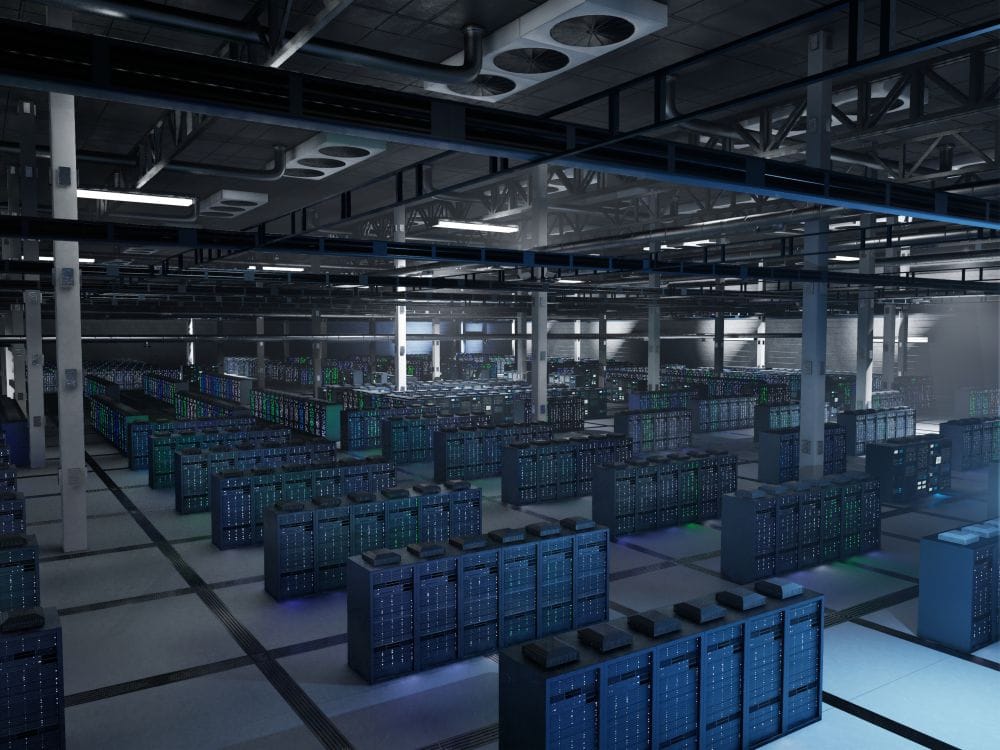
A data center is a specialized facility designed to accommodate computing systems and related infrastructure used to store, process, and transmit digital data. They ensure:
- Continuous availability (24/7/365)
- High security (physical and cyber)
- Controlled temperature and humidity
- Reliable power supply with backups
At its core, a data center enables organizations to run applications, manage information, and deliver digital services without interruption.
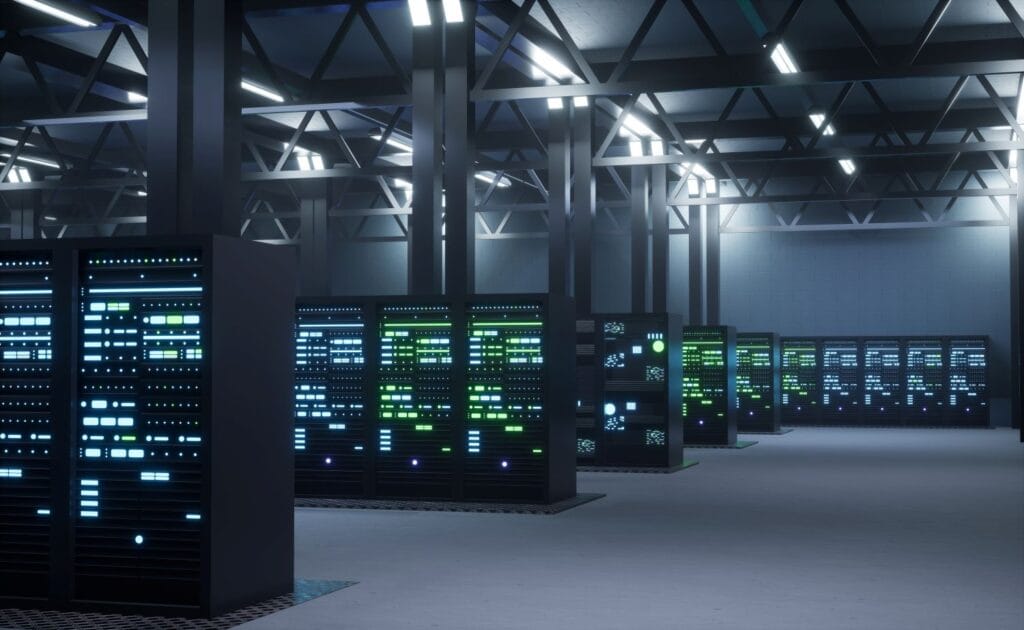
Key Components of a Data Center
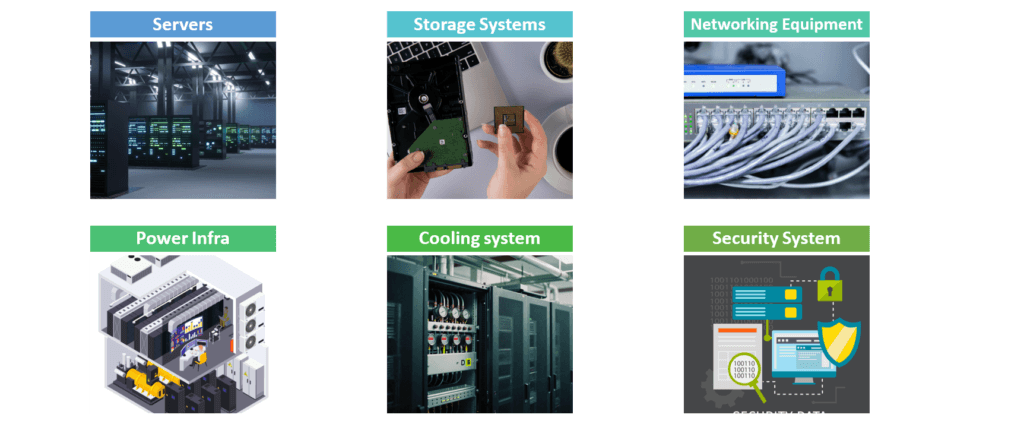
Servers
Servers are simply computers that process data and run applications. When any website or app is opened, a server responds to the request. Servers operate 24/7 and are designed for high reliability and speed.
For example:
- Google Data Centers run millions of servers to support Gmail, YouTube, and Search.
- AWS (Amazon Web Services) servers power Netflix, Swiggy, and many Indian startups.
Storage Systems
Storage systems store data, including files, videos, databases, and backups. In India, companies like CtrlS and NTT India provide large-scale data storage services to banks, telecom companies, and government organizations.
Types of storage include:
- Hard drives (HDDs) for large storage
- SSDs for faster performance
- Cloud storage systems for remote access
Networking Equipment
Networking equipment promotes faster and secure data travel between servers, users, and the internet. Cloud providers like Microsoft Azure use advanced networking to ensure low-latency access across regions.
This includes:
- Routers to guide data traffic
- Switches to connect systems internally
- High-speed fiber cables
Power Infrastructure
Data centers require an uninterrupted power supply (backup generators, substations, and multiple power feeds) to avoid downtime. Indian centers such as Yotta NM1 are built with 100% power backup to ensure continuous operations even during power failures.
Cooling Systems
Cooling systems maintain adequate temperatures to avoid damage. Large hyperscale data centers like Google and Amazon utilize energy-efficient cooling to reduce costs and environmental impact.
Cooling methods include air conditioning, liquid cooling, and designs involving hot aisle and cold aisle.
Security Systems
Security is of critical importance in data centers as they store sensitive information. Different security measures include CCTV surveillance, biometric access, firewalls, and cybersecurity monitoring.
Advantages
- High reliability and uptime
- Wide scalability
- Cost optimization
- Fast response times
- Advanced security
- Disaster recovery
- Innovation enablement
Disadvantages
- High energy consumption
- Environmental Impact
- Cooling complexity
- Security risks
- High Initial Investment
Types of Data Centers
Enterprise Data Centers
Enterprise data centers, also known as on-premise centers, are owned, managed, and operated by a single organization for internal IT workloads. These facilities are usually located within company premises or dedicated private buildings. These are best suited for organizations handling highly sensitive data, such as banks, government agencies, defense organizations, and healthcare providers.
Key characteristics
- Full ownership and control of hardware and software
- Custom security, compliance, and governance policies
- Dedicated IT teams for operations and maintenance
Advantages
- Maximum data security and privacy
- Easier compliance with strict regulations
- Customizable infrastructure
Challenges
- High capital and operational costs
- Limited scalability
- Requires skilled in-house IT staff
Colocation Data Centers
Colocation centers are third-party facilities where businesses rent rack space, power, cooling, and network connectivity while retaining ownership of their servers and equipment. This type is important for businesses that want greater control over hardware without investing in expensive infrastructure.
Key characteristics
- Shared infrastructure with enterprise-grade reliability
- High availability and redundancy
- Strong physical and network security
Advantages
- Lower costs compared to building private data centers
- Access to carrier-neutral connectivity
- Improved uptime and disaster recovery
Challenges
- Hardware maintenance is still the customer’s responsibility
- Limited flexibility compared to cloud environments
Cloud Data Centers
These are owned and operated by cloud service providers. Users access servers, storage, and networking through web-based platforms. Startups, enterprises, and digital businesses seeking scalability, flexibility, and global reach should opt for cloud data centers.
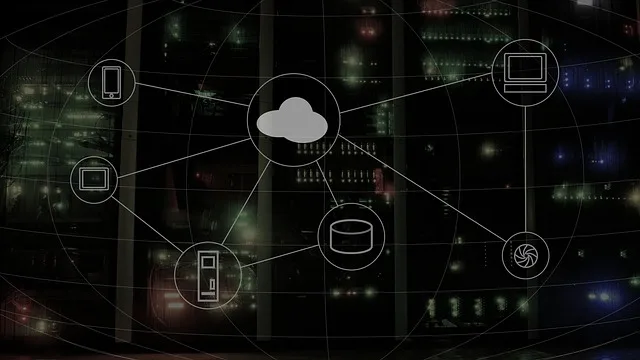
Popular cloud providers include AWS, Microsoft Azure, Google Cloud, and in India, providers like Reliance Jio Cloud and Tata Communications.
Specifications
- On-demand resource provisioning
- Pay-as-you-use pricing model
- Global presence
Advantages
- Unlimited scalability
- Rapid deployment of applications
- Reduced infrastructure management
Challenges
- Ongoing operational expenses
- Vendor lock-in concerns
- Data residency and compliance issues
Hyperscale Data Centers
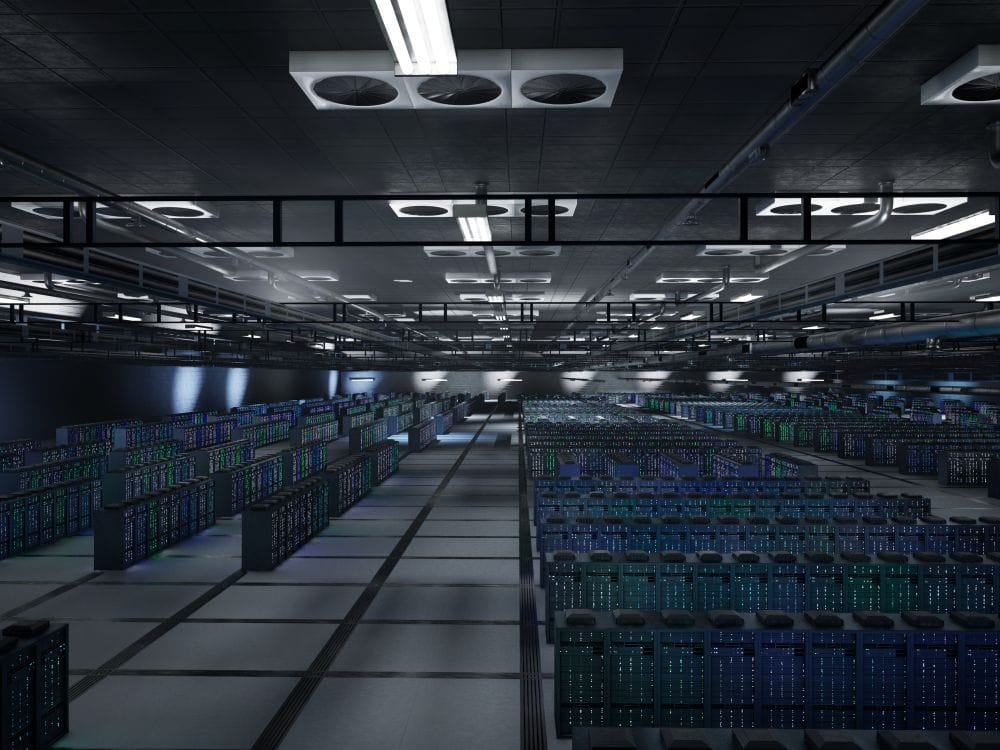
Hyperscale centers are massive facilities designed to support large-scale cloud computing, big data analytics, and AI workloads. These are huge and contain hundreds of thousands of servers. This type is best suited for big-tech companies and cloud service providers that deliver global digital services, such as search engines, streaming platforms, and AI systems.
Key characteristics
- Extreme computing and storage capacity
- Advanced automation and AI-driven operations
- High energy efficiency and renewable energy use
Advantages
- Supports billions of users simultaneously
- Optimized for AI, ML, and big data processing
- Lower cost per compute unit at scale
Challenges
- High initial investment
- Complex design and operational requirements
Edge Data Centers
Edge data centers are small, localized facilities positioned closer to end users and data sources. Applications requiring real-time processing, such as IoT, online gaming, autonomous vehicles, smart cities, and AR/VR should opt for edge data centers.
Features
- Low-latency data processing
- Proximity to IoT devices and users
- Supports real-time analytics
Advantages
- Faster response times
- Reduced bandwidth usage
- Improved performance for latency-sensitive applications
Challenges
- Limited storage and compute capacity
- More complex management due to distributed locations
| Data Center Type | Ownership | Scalability | Cost Model | Best Use Case |
|---|---|---|---|---|
| Enterprise | Private | Limited | High CapEx | Sensitive data |
| Colocation | Hybrid | Medium | Fixed + OpEx | Hardware control |
| Cloud | Provider | High | Pay-as-you-use | Rapid scaling |
| Hyperscale | Provider | Extreme | Optimized at scale | Global platforms |
| Edge | Distributed | Limited | Distributed OpEx | Low latency apps |
How Data Centers Work
At a high level, data centers work by receiving, processing, storing, and delivering digital information within milliseconds. Whether you’re opening a website, streaming a video, or making an online payment, they operate silently in the background to make it happen.

User sends a Digital Request
Every digital action begins with a user request. When you click or tap, your device (smartphone, laptop, or tablet) sends a data request through your internet connection.
Request goes through the Internet
The request travels across the internet infrastructure, passing through:
- Internet Service Providers (ISPs)
- Routers and switches
- Content delivery networks (CDNs), if applicable
Using optimized routing protocols, the request is directed to the nearest or most suitable data center, thereby reducing latency and improving speed.
Data Center receives and routes the Request
Once the request reaches the data center:
- Load balancers distribute traffic across multiple servers
- Firewalls and security systems inspect the request
- Authentication systems verify user access
This ensures security, availability, and optimal performance even during peak traffic.
Servers process the Request
Inside the data center, high-performance servers process the request by:
- Running applications and software services
- Accessing databases and storage systems
- Performing calculations or retrieving stored data
For example, when opening a website, the server fetches the required files HTML, images, scripts from storage and assembles them into a response.
Response is sent back to the User
After processing, the result is sent back through the same network path to the user’s device in milliseconds. Faster responses depend on server performance, network bandwidth, and geographic proximity
This speed is what enables seamless experiences like video streaming, online gaming, and real-time communication.
Built-in Redundancy and Failover Systems
Behind this seemingly simple flow lies a highly resilient data center architecture. To ensure uninterrupted service, data centers use multiple layers of redundancy:
- Backup servers and storage systems
- Redundant power supplies and UPS systems
- Multiple network connections
- Automated failover mechanisms
If one component fails, another instantly takes over—often without users noticing. This is why modern data centers achieve 99.99% or higher uptime.
Real‑World Applications
Cloud Computing Platforms
Cloud providers like AWS, Microsoft Azure, Google Cloud, and Indian players such as Tata Communications and Reliance Jio operate massive data centers worldwide. These platforms enable scalability, cost efficiency, and global accessibility without requiring businesses to maintain physical infrastructure.
Cloud computing applications encompass web hosting and application deployment, data storage and backup, Software as a Service (SaaS) platforms, and remote work and collaboration tools.
Online Banking and Financial Systems
The banking, financial services, and insurance (BFSI) sector relies heavily on highly secure data centers to process sensitive transactions. They ensure high availability, data security, and regulatory compliance, which are critical for financial trust and stability.
Below is the list of typical transactions.
- Real-time fund transfers (UPI, NEFT, RTGS)
- ATM and card transaction processing
- Fraud detection and risk analysis
- Digital wallets and mobile banking apps
Streaming and Digital Media
Streaming platforms operate at a massive scale, delivering content to millions of users simultaneously. A few examples include video streaming (Netflix, YouTube, Hotstar), Music platforms (Spotify, Apple Music), and Online gaming.
Data centers work alongside Content Delivery Networks (CDNs) to reduce latency and deliver high-quality media experiences across regions.
E-Commerce and Retail Platforms
Every click on an e-commerce website triggers multiple data center operations. Major platforms like Amazon, Flipkart, and Shopify rely on globally distributed centers to handle peak traffic during sales events.

Healthcare Records and Medical Research
In healthcare, data centers store and process critical patient and research data. Some of the key examples involve Electronic Health Records (EHRs), Medical imaging and diagnostics, Genomics and pharmaceutical research, and Telemedicine and remote consultations.
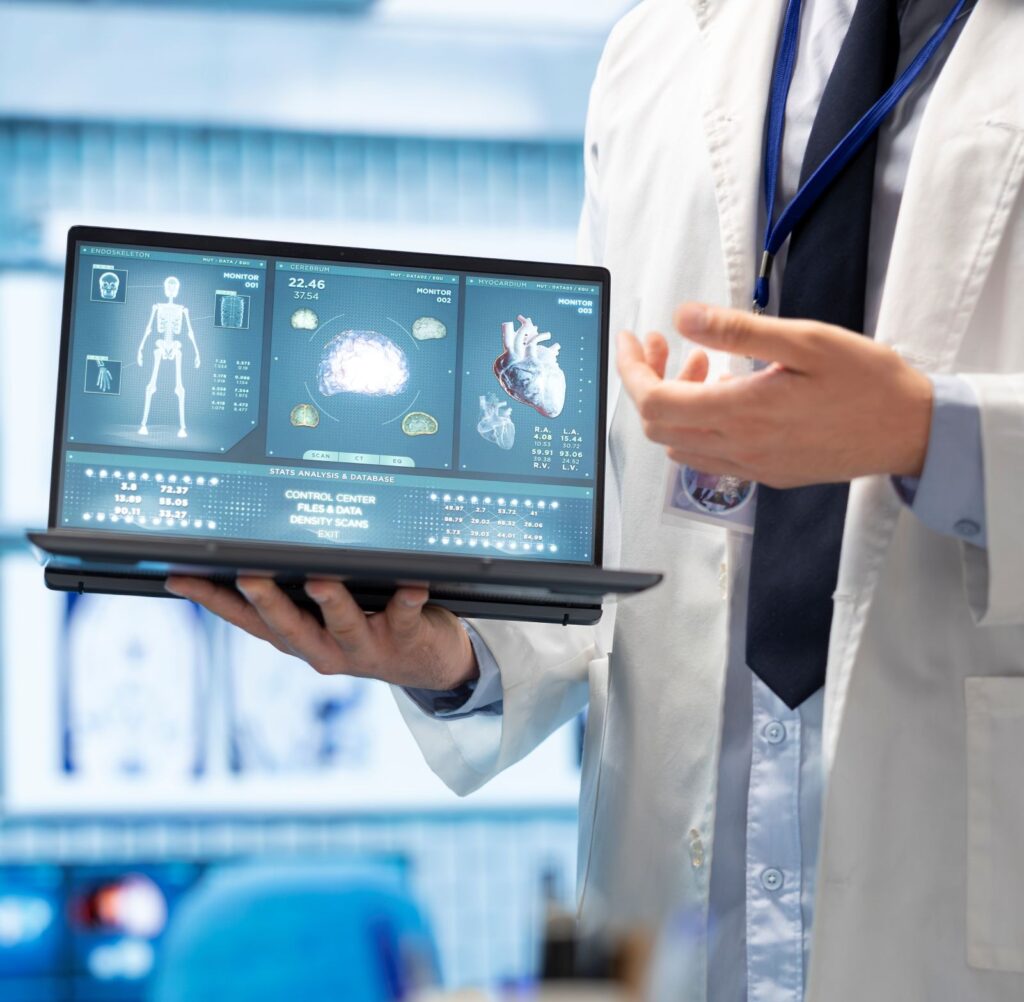
Secure and compliant data centers support HIPAA-like regulations, data integrity, and life-saving innovations.
Read more, Top 5 Trends and Applications of IoT in Healthcare.
Government and Public Services
Governments use data centers to deliver digital governance and public services efficiently and securely.
Applications include:
- Digital identity systems
- Tax filing and public records
- Smart city platforms
- Defense and national security systems
AI Training and Deployment
Modern AI and machine learning systems depend on data centers equipped with high-performance computing resources. They mainly work with training large language models, computer vision and speech recognition, predictive analytics and automation, and Recommendation engines.
AI workloads require GPU-accelerated data centers, advanced cooling, and massive storage capacity.
Telecom and 5G Networks
Telecom networks rely on data centers to support high-speed communication and connectivity.
They enable ultra-low latency and high bandwidth, making technologies like autonomous vehicles and IoT possible.
Future of Data Centers
Artificial Intelligence Driven Optimization
AI-powered systems will analyze real-time operational data to optimize workload distribution, energy consumption, predictive maintenance, and failure detection and prevention.
By using machine learning models, data centers can proactively resolve issues before they impact performance, significantly improving uptime and efficiency.
Automation and Autonomous Operations
Manual data center management is rapidly being replaced by automation and autonomous operations.
Future centers will feature self-healing systems, automated provisioning and scaling, software-defined infrastructure, and minimal human intervention
This shift reduces operational costs, human error, and downtime.
Edge Cloud Convergence
As latency-sensitive applications grow, the future lies in edge cloud convergence—a hybrid model combining centralized cloud centers with distributed edge facilities.
This architecture supports real-time analytics, IoT platforms, autonomous vehicles, and AR/VR and immersive experiences.
Stricter Environmental and Sustainability Regulations
With rising global energy consumption, data centers are under increasing pressure to meet environmental regulations and sustainability targets.
Future-focused initiatives include:
- Carbon-neutral
- Renewable energy integration
- Water-efficient cooling systems
- Lower Power Usage Effectiveness (PUE)
Governments and enterprises alike are pushing for green data centers that balance performance with environmental responsibility.
Smarter Power and Cooling Systems
Power and cooling remain the biggest operational challenges for data centers. Innovations in this area will define future efficiency.
Emerging technologies include:
- AI-managed energy systems
- Liquid and immersion cooling
- Advanced battery storage
- Smart grids and microgrids
Data centers will evolve into intelligent digital factories, not just storage facilities.